
-
Mindful Movement for Moms-to-Be
Pregnancy places unique demands on the body. Muscles that once worked predictably start adapting, posture shifts, and your balance responds to a new center of gravity.
Pre-natal Pilates is about tuning in to how your body organizes itself. Movements link breath, core, and alignment, building support from the inside out. This foundation stays with you as your body changes, helping you stay mobile, reduce strain, and move comfortably throughout pregnancy and thereafter.
For instructors, it’s about reading the body. Cues and modifications respond to what the individual needs, keeping movement safe, effective, and supportive from one trimester to the next.
-
Understanding Diastasis Recti & Core Engagement
During pregnancy, the rectus abdominis muscles naturally undergo some degree of separation to accommodate the growing uterus. This is a normal physiological change. When this separation becomes excessive and begins to affect function, it is referred to as diastasis recti.
In conversation with pilates, kenali explains that this shift places greater importance on the deeper core muscles —particularly the transverse abdominis and pelvic floor—which provide essential support during this time.
When these muscles are not properly engaged, the midline may bulge during movement, often referred to as abdominal coning. This can also be accompanied by pressure, instability, lower back discomfort, or difficulty with everyday movements such as lifting or getting out of bed. These signs indicate that the core is not providing enough support for the spine and pelvis.
In Pilates, pelvic floor and deep core engagement are always important, but during pregnancy, their role becomes more pronounced. As the abdominal wall stretches, these muscles help stabilize the body, manage internal pressure, and reduce strain, allowing movement to feel controlled and supported.
-
Protecting the Core with Transitional Movement
Bianca shares that protecting the abdominal wall begins with how you transition into movement. Moving directly up and down or shifting without control places added pressure on the rectus abdominis and can worsen diastasis recti.
When preparing for lying or side-lying positions, drawing the knees in and using the arms for support engages the deep core before the outer abdominal wall bears weight. This setup establishes stability and reduces strain, giving the body a solid foundation for whatever follows.
-
Breath and Pelvic Engagement
Breathing plays an important role in prenatal Pilates because it helps support the body from the inside. Before starting a movement, take a deep inhale to prepare the body, then exhale while gently engaging the core muscles and pelvic floor. This helps improve stability, balance, and control during exercise.
Practicing these breathing and engagement techniques regularly can make movements feel smoother and more comfortable during pregnancy. It also helps reduce unnecessary strain on the body as it changes over time.
-
Adapting Intensity and Modifications
As pregnancy progresses, some exercises may start to feel more challenging, especially during the second and third trimesters. The body may also have a reduced range of motion, so it is important to adjust exercises based on comfort and safety.
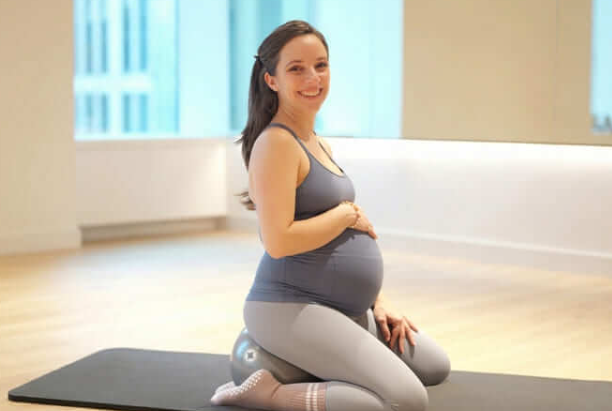
Using props and supports can make workouts easier and safer. Supportive equipment or cushions can help provide better balance and stability during exercises. Adding soft padding under the hips during movements like pelvic curls or using a stability ball for side leg exercises can help reduce pressure on the abdomen and support proper core engagement.
Listening to your body and making small modifications when needed can help keep prenatal Pilates comfortable, safe, and effective. These adjustments also support strength, posture, and recovery during and after pregnancy.

