
Phones, laptops, tablets, and digital screens have become an essential part of modern life. We work on screens, attend meetings online, communicate through smartphones, watch entertainment, and even relax by scrolling through social media.
But while technology makes life easier, our bodies may be paying a hidden price.
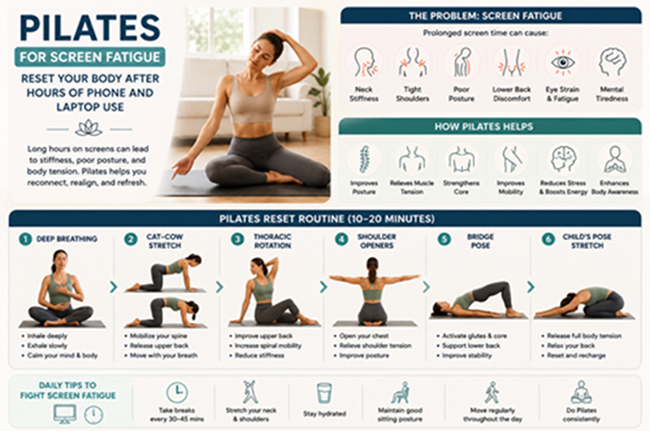
After spending hours in front of a screen, you might notice a stiff neck, rounded shoulders, tight hips, an aching lower back, tired eyes, or a general feeling that your body simply needs to move.
This modern experience is often described as screen fatigue or digital fatigue.
Screen fatigue is not only about tired eyes. Long periods of sitting and repetitive screen habits can influence how your entire body feels and moves.
This is where Pilates may offer a refreshing movement reset.
Pilates combines controlled movement, breathing, posture awareness, mobility, and core engagement. Rather than forcing your body through an aggressive workout, it encourages you to reconnect with movement and become more aware of tension patterns created during the day.
So, can Pilates help your body feel better after hours of phone and laptop use?
Let’s explore.
What Is Screen Fatigue?
Screen fatigue is commonly associated with the mental and physical tiredness people experience after spending extended periods using digital devices.
You may finish a full workday without doing intense physical activity yet still feel completely exhausted.
Why?
Your body may have spent several hours maintaining similar positions.
Think about your usual laptop posture.
Your head may move forward toward the screen. Your shoulders may gradually round. Your upper back may become stiff. Your hips remain bent while sitting, and your core muscles may not be actively supporting your posture.
Now consider smartphone use.
Many people hold their phone below eye level and look downward for extended periods. Over time, this position may create additional tension around the neck and shoulders.
Common signs associated with prolonged screen use can include:
- Neck stiffness
- Shoulder tension
- Upper back discomfort
- Tight hips
- Lower back stiffness
- Reduced mobility
- Mental tiredness
- Difficulty maintaining good posture
- Feeling physically inactive
- General body tension
The problem is often not the screen itself.
The bigger issue is how long your body remains in the same position without enough movement.
How Screen Time Changes the Way Your Body Feels
The human body is designed to move.
Walking, reaching, bending, rotating, and changing positions help different muscles participate throughout the day.
Screen-based work often reduces this natural movement variety.
You may sit at a desk for one or two hours without realizing how much time has passed.
During prolonged sitting, certain areas may begin to feel tight while others may become less active.
For example, the muscles around your hips may feel restricted after sitting for long periods. Your upper back may become less mobile, and your shoulders may gradually move forward.
This does not mean your posture is permanently damaged.
However, your body may begin adapting to the positions you repeat most frequently.
Pilates encourages the opposite approach: intentional movement, controlled mobility, and improved body awareness.
How Pilates May Help With Screen Fatigue
Pilates focuses on movement quality rather than simply performing as many repetitions as possible.
This makes it particularly interesting for people who spend much of their day sitting.
1. Pilates Encourages Better Posture Awareness
One of the first things many people notice during Pilates is how much attention is given to body alignment.
You begin noticing the position of your head, shoulders, rib cage, pelvis, and spine.
This awareness may gradually carry into everyday activities.
You might suddenly notice yourself slouching at your desk and naturally adjust your position.
Pilates does not teach you to hold one “perfect posture” all day.
Instead, it helps you become more aware of how your body is positioned and encourages more efficient movement.
2. It Gets Your Spine Moving Again
After hours of sitting, the spine may feel stiff.
Pilates exercises often include gentle spinal flexion, extension, rotation, and controlled articulation.
These movements encourage the spine to move through different directions rather than remaining in one fixed position.
Exercises such as pelvic curls, spinal rotation, and controlled roll-down movements can introduce movement back into areas that may feel restricted after a long workday.
The goal is not aggressive stretching.
The goal is controlled, comfortable movement.
3. Pilates Can Open Tight Shoulders and the Upper Body
Laptop and smartphone habits may encourage the shoulders to move forward.
Pilates exercises can focus on upper-body mobility and shoulder control.
Through mindful arm movements, chest-opening exercises, and upper-back activation, you can explore a more balanced shoulder position.
Many people describe this feeling as “opening the chest” after a long day at the desk.
4. It Reconnects You With Your Core
When sitting for long periods, you may become less aware of your core muscles.
Pilates places significant attention on controlled core engagement.
The core is more than visible abdominal muscles. It includes a deeper system of muscles that supports the trunk and contributes to efficient movement.
Pilates exercises encourage these muscles to work together while you breathe and move.
Improved core awareness may help you feel more supported during daily activities.
5. Pilates Helps Move Tight Hips
Your hips remain in a flexed position while sitting.
After several hours, standing up may make your hips feel stiff or restricted.
Pilates includes exercises that encourage hip mobility, glute activation, and controlled leg movement.
Bridges, leg circles, and other lower-body exercises may help restore movement after prolonged sitting.
The focus remains on control rather than forcing flexibility.
How Pilates May Help With Screen Fatigue
Pilates focuses on movement quality rather than simply performing as many repetitions as possible.
This makes it particularly interesting for people who spend much of their day sitting.
1. Pilates Encourages Better Posture Awareness
One of the first things many people notice during Pilates is how much attention is given to body alignment.
You begin noticing the position of your head, shoulders, rib cage, pelvis, and spine.
This awareness may gradually carry into everyday activities.
You might suddenly notice yourself slouching at your desk and naturally adjust your position.
Pilates does not teach you to hold one “perfect posture” all day.
Instead, it helps you become more aware of how your body is positioned and encourages more efficient movement.
2. It Gets Your Spine Moving Again
After hours of sitting, the spine may feel stiff.
Pilates exercises often include gentle spinal flexion, extension, rotation, and controlled articulation.
These movements encourage the spine to move through different directions rather than remaining in one fixed position.
Exercises such as pelvic curls, spinal rotation, and controlled roll-down movements can introduce movement back into areas that may feel restricted after a long workday.
The goal is not aggressive stretching.
The goal is controlled, comfortable movement.
3. Pilates Can Open Tight Shoulders and the Upper Body
Laptop and smartphone habits may encourage the shoulders to move forward.
Pilates exercises can focus on upper-body mobility and shoulder control.
Through mindful arm movements, chest-opening exercises, and upper-back activation, you can explore a more balanced shoulder position.
Many people describe this feeling as “opening the chest” after a long day at the desk.
4. It Reconnects You With Your Core
When sitting for long periods, you may become less aware of your core muscles.
Pilates places significant attention on controlled core engagement.
The core is more than visible abdominal muscles. It includes a deeper system of muscles that supports the trunk and contributes to efficient movement.
Pilates exercises encourage these muscles to work together while you breathe and move.
Improved core awareness may help you feel more supported during daily activities.
5. Pilates Helps Move Tight Hips
Your hips remain in a flexed position while sitting.
After several hours, standing up may make your hips feel stiff or restricted.
Pilates includes exercises that encourage hip mobility, glute activation, and controlled leg movement.
Bridges, leg circles, and other lower-body exercises may help restore movement after prolonged sitting.
The focus remains on control rather than forcing flexibility.
Pilates for screen fatigue offers a mindful way to reconnect with your body after hours of phone and laptop use.
Through controlled movement, breathing, spinal mobility, core engagement, and posture awareness, Pilates can become a valuable part of a modern wellness routine.
Your body does not always need a harder workout.
Sometimes, it simply needs the opportunity to move, breathe, and reset.
If your daily life revolves around screens, consider giving your body regular movement breaks and exploring Pilates with a qualified instructor.

