Light Therapy, also known as Lighting Therapy, has become a powerful and science-backed wellness solution in the modern fitness and health industry. From premium Pilates studios to physiotherapy and recovery centers, light therapy is widely used for muscle recovery, skin rejuvenation, pain relief, and overall well-being.
What makes light therapy truly effective is its use of different wavelengths of light, each designed to penetrate specific layers of the skin and body tissues. In this blog, we will explain light therapy in detail, based on wavelengths (nm), how it works on the skin and muscles, and why it is an ideal addition to Pilates and fitness routines.
What Is Light Therapy?
Light Therapy is a non-invasive treatment that uses specific wavelengths of visible and near-infrared light to stimulate natural healing processes in the body. These light waves penetrate the skin and reach the cells, where they activate cellular energy production.
Light therapy works by stimulating the mitochondria, often called the “powerhouse of the cell.” When mitochondria absorb light energy, they produce more ATP (cellular energy), which helps the body:
- Heal faster
- Reduce inflammation
- Improve blood circulation
- Enhance muscle and skin recovery
Because it is pain-free and drug-free, light therapy is widely used in wellness, beauty, medical, and fitness industries.
Why Wavelength Matters in Light Therapy:
Light therapy is not just about light it is about the right wavelength.
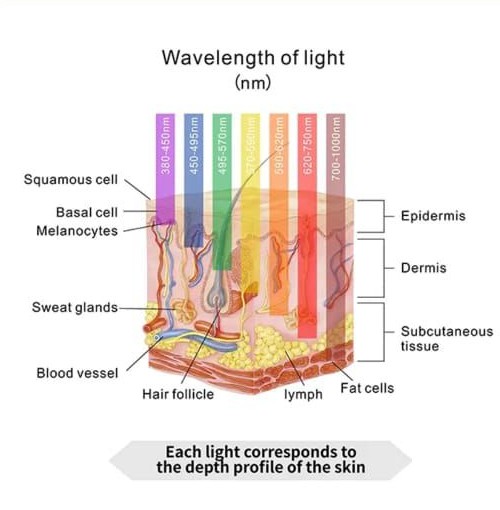
Each wavelength, measured in nanometers (nm), penetrates the skin at a different depth and targets different tissues such as:
- Epidermis (surface skin layer)
- Dermis (middle skin layer)
- Subcutaneous tissue (fat, muscles, joints, lymph)
Choosing the correct wavelength ensures targeted and effective treatment.
Light Therapy Wavelengths and Their Benefits:
-
380–450 nm: Blue Light Therapy:
Penetration Level: Epidermis (top skin layer)
Benefits:
- Kills acne-causing bacteria
- Controls excess oil production
- Helps manage surface-level skin conditions
Best For: Acne-prone skin, oily skin, superficial skin concerns.
-
450–495 nm: Light Blue / Cyan Light:
Penetration Level: Epidermis and upper dermis
Benefits:
- Calms irritated skin
- Reduces mild inflammation
- Soothes sensitive skin
Best For: Sensitive skin, redness, skin calming treatments
-
495–570 nm: Green Light Therapy
Penetration Level: Dermis
Benefits:
- Reduces hyperpigmentation
- Balances melanin production
- Improves uneven skin tone
Best For: Dark spots, pigmentation, uneven skin tone
-
570–590 nm: Yellow Light Therapy:
Penetration Level: Dermis
Benefits:
- Improves blood circulation
- Reduces redness and swelling
- Promotes skin rejuvenation
Best For: Dull skin, redness, rosacea-prone skin
-
590–620 nm: Orange Light Therapy
Penetration Level: Deep dermis
Benefits:
- Stimulates collagen production
- Improves skin elasticity
- Enhances natural skin glow
Best For: Aging skin, tired skin, collagen loss
-
620–750 nm: Red Light Therapy
Penetration Level: Dermis and subcutaneous tissue
Benefits:
- Accelerates muscle recovery
- Reduces joint and muscle pain
- Boosts collagen and elastin
- Improves skin firmness and texture
Best For: Pilates recovery, muscle soreness, anti-aging treatments
-
700–1000 nm: Near-Infrared Light Therapy
Penetration Level: Deep muscles, joints, fat cells, lymphatic system
Benefits:
- Deep tissue healing
- Reduces chronic inflammation
- Improves blood flow and oxygen delivery
- Supports injury recovery and fat metabolism
Best For: Chronic pain, post-workout recovery, injury rehabilitation
How Light Therapy Works on Skin and Muscles
Light therapy works layer by layer:
- Epidermis: Skin renewal and bacterial control
- Dermis: Collagen production and blood circulation
- Subcutaneous Tissue: Muscle recovery, joint support, inflammation reduction
This multi-layer approach makes light therapy effective for both beauty and fitness recovery.
Light Therapy in Pilates and Fitness Studios
Pilates is a low-impact yet highly effective workout that focuses on strength, flexibility, and posture. However, intense Pilates sessions can still cause muscle fatigue and soreness.
When light therapy is combined with Pilates, it offers:
- Faster muscle recovery
- Reduced post-workout soreness
- Improved flexibility and performance
- Enhanced relaxation and stress relief
This is why many premium Pilates studios integrate light therapy into their recovery programs.
Is Light Therapy Safe?
Yes, light therapy is clinically studied and widely considered safe when used correctly.
Key safety features include:
- Non-invasive and pain-free treatment
- No chemicals or medications involved
- FDA-cleared and clinically tested technology
Safety Guidelines:
- Avoid direct eye exposure
- Use certified and professional devices
- Follow expert supervision in studio.
Who Can Benefit from Light Therapy?
Light therapy is suitable for a wide range of individuals, including:
- Pilates and fitness enthusiasts
- People with muscle or joint pain
- Individuals focused on skin health and anti-aging
- Those experiencing stress or fatigue
- People recovering from injuries
Professional Light Therapy vs Home Devices
While home devices are convenient, professional light therapy studios offer:
- Multiple wavelength control
- Targeted treatment plans
- Higher intensity and better results
- Safe and controlled environments
This makes professional light therapy more effective, especially for fitness recovery and wellness programs.
Why Choose Light Therapy at Pilates With Kenali?
At Pilates With Kenali, light therapy is integrated with a holistic wellness approach:
- Advanced technology-based treatments
- Pilates-focused recovery solutions
- Personalized client care
By combining Pilates workouts with light therapy, clients experience faster results, improved recovery, and enhanced overall well-being.
Conclusion
Light Therapy (Lighting Therapy) is a science-driven wellness treatment that uses specific light wavelengths to heal, restore, and rejuvenate the body. From skin health and anti-aging to muscle recovery and pain relief, light therapy offers a wide range of benefits.
When combined with Pilates, it becomes a powerful recovery and wellness solution that supports both physical performance and long-term health.

