Bloating can leave you feeling heavy, uncomfortable, and less energetic—even when you are otherwise having a perfectly normal day. Your stomach may feel unusually full or tight, your clothes may feel uncomfortable, and sometimes the sensation appears without an obvious reason.
Diet is often the first thing people think about when bloating occurs. While food can certainly play a role, digestion is influenced by many other factors, including physical activity, stress, hydration, eating habits, and certain health conditions.
This raises an interesting question: Can Pilates help with bloating?
Pilates is not a treatment for digestive disorders, and it cannot address every cause of bloating. However, its combination of gentle movement, controlled breathing, posture awareness, and relaxation may support some of the lifestyle factors connected with digestive comfort.
Let’s explore how Pilates may fit into a healthy routine when bloating is making you feel uncomfortable.
What Is Bloating?
Bloating is generally described as a feeling of fullness, pressure, tightness, or swelling in the abdominal area.
Sometimes the abdomen may visibly appear larger, while at other times you may simply feel uncomfortable without much visible change.
Occasional bloating is common and can happen for many reasons, including:
- Eating large meals
- Eating too quickly
- Swallowing excess air
- Constipation
- Gas buildup
- Certain foods or drinks
- Hormonal changes
- Stress
- Changes in routine
- Reduced physical activity
Because bloating can have many possible causes, there is no single exercise or wellness technique that will work for everyone.
However, when bloating is related to inactivity, stress, or everyday digestive discomfort, gentle movement may sometimes help you feel better.
Can Pilates Help With Bloating?
Pilates may indirectly support digestive comfort through movement, breathing, mobility, and relaxation.
Think about what happens after spending several hours sitting at a desk.
Your hips remain in one position, your trunk moves very little, and your overall physical activity may decrease significantly.
A Pilates session gets your body moving again.
Instead of intense jumping or high-impact exercise, Pilates uses controlled movements involving the spine, hips, abdominal area, and the rest of the body.
For some people, this gentle activity may feel more comfortable when experiencing mild bloating than a very intense workout.
However, Pilates should be viewed as part of an overall healthy lifestyle—not as a cure for bloating.
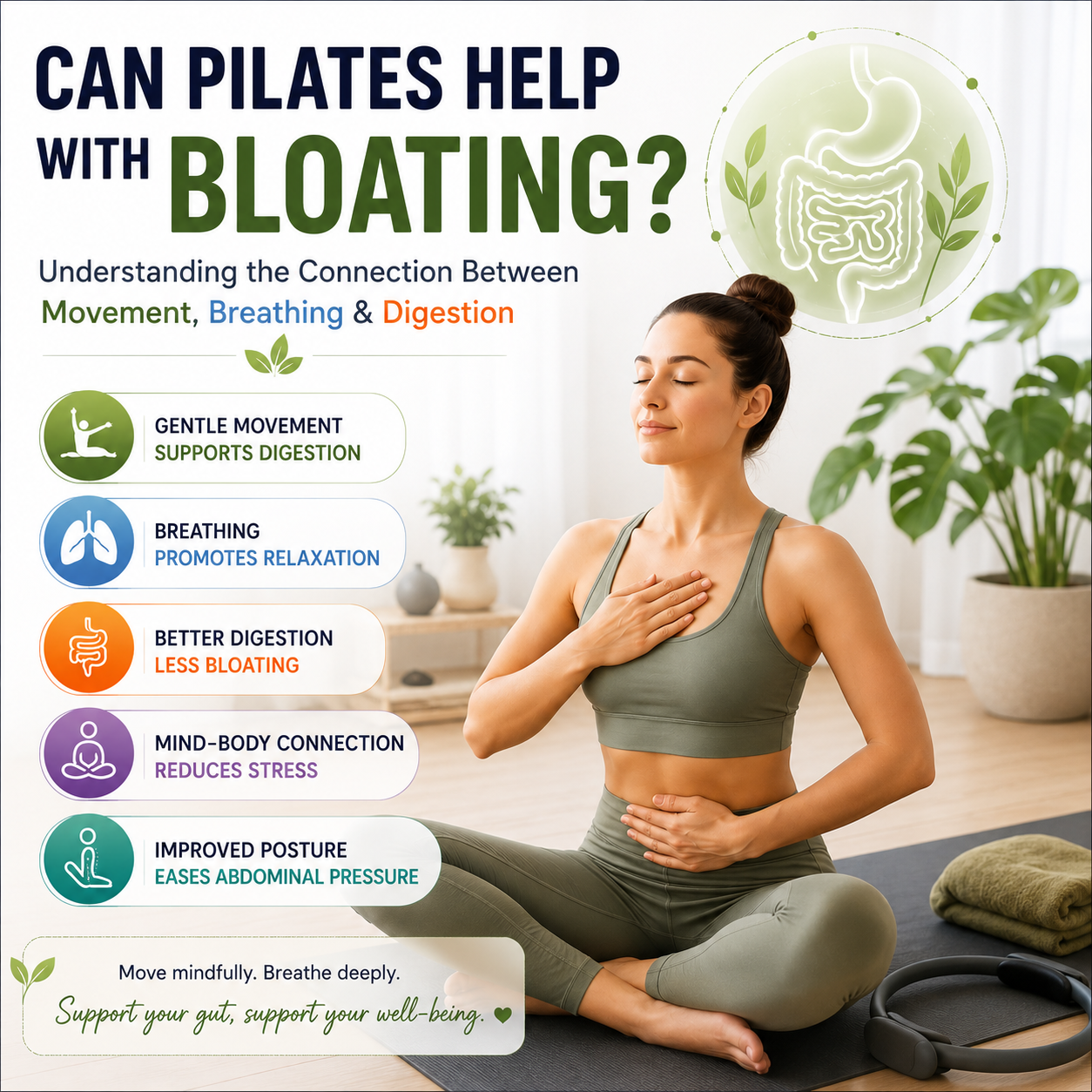
1. Gentle Movement May Support Digestion
The digestive system works independently, but general physical activity can play a role in supporting healthy bowel function and overall digestive wellness.
Pilates provides a low-impact way to introduce movement into your day.
Many exercises involve controlled movements of the:
- Pelvis
- Hips
- Spine
- Abdominal area
- Legs
- Upper body
This full-body movement can be particularly refreshing if you’ve spent most of the day sitting.
Even outside Pilates classes, something as simple as walking after a meal can be a useful way to add gentle activity to your routine.
The important idea is simple:
Your body is designed to move regularly.
Pilates provides one structured and mindful way to do that.
2. Pilates Breathing May Help You Relax
Breathing is one of the fundamental elements of Pilates.
Rather than holding your breath while performing an exercise, Pilates encourages coordinated breathing and movement.
During a session, you become more aware of how you inhale, exhale, and use your abdominal and trunk muscles.
This can have another important effect: it gives you time to slow down.
Stress and digestion are closely connected. When you’re anxious, overwhelmed, or constantly rushing, you may notice changes in appetite, bowel habits, or abdominal comfort.
A Pilates session requires concentration on your body and breathing instead of emails, notifications, deadlines, or other daily distractions.
That mindful breathing may help create a calmer exercise experience.
For someone whose digestive discomfort tends to become more noticeable during stressful periods, the relaxation component of Pilates can be particularly valuable.
3. Pilates Encourages Better Body Awareness
How often do you actually pay attention to your body during the day?
Modern lifestyles make it easy to spend hours sitting, scrolling, driving, or working without noticing how your body feels.
Pilates changes that.
During a class, you pay attention to:
- Your breathing
- Your abdominal muscles
- Your spine
- Your pelvis
- Your shoulders
- Muscle tension
- How your body responds to movement
This increased body awareness may help you recognize lifestyle patterns associated with discomfort.
For example, you may begin noticing that you feel particularly bloated after eating quickly before work or that your body feels uncomfortable after sitting for several hours without moving.
Pilates doesn’t necessarily solve the underlying cause, but greater body awareness can help you understand your body’s patterns.
4. Posture and Abdominal Comfort
Posture doesn’t directly cure digestive problems, but your sitting and movement habits can influence how comfortable your abdominal area feels.
Imagine eating a large meal and immediately spending several hours hunched over a laptop.
You may simply feel more compressed and uncomfortable.
Pilates encourages awareness of spinal alignment, trunk control, and mobility.
Rather than teaching you to maintain one rigid “perfect posture,” a good Pilates practice encourages your body to move through different positions.
Regularly changing position and avoiding prolonged inactivity may help you feel less stiff and compressed throughout the day.
Pilates Movements to Consider When You Feel Bloated
When you’re experiencing mild bloating, the goal shouldn’t necessarily be to perform the hardest workout possible.
Gentle movement may feel much better.
Depending on your experience and instructor’s guidance, a comfortable session might include:
Pelvic Tilts
Small, controlled pelvic movements can help mobilize the lower back and pelvis without requiring intense effort.
Gentle Spinal Rotation
Controlled rotation introduces movement to the trunk after long periods of sitting.
Avoid forcing the movement or twisting aggressively.
Cat-Cow Style Movement
Gentle spinal flexion and extension can help restore movement throughout the back and trunk.
Knee-to-Chest Movements
When comfortable, bringing one leg toward the torso can provide a gentle stretch around the hips and lower back.
Pilates Bridge
Bridges activate the glutes and encourage controlled movement through the pelvis and spine.
Gentle Stretching
Comfortable hip, back, and full-body stretches may help reduce the feeling of general stiffness.
Remember: comfort should come before intensity.
If an exercise increases abdominal pain or discomfort, stop and seek appropriate professional advice if necessary.
When Should You Do Pilates for Bloating?
There isn’t one perfect time.
Some people enjoy Pilates in the morning because movement helps them feel energized for the day.
Others prefer an afternoon or evening session after spending several hours sitting.
If you’ve just eaten a large meal, however, immediately performing demanding abdominal exercises may feel uncomfortable.
Giving yourself appropriate time to digest before a full workout can make the experience more pleasant.
A gentle walk may be a more comfortable option immediately after eating.
Pay attention to how your individual body responds rather than following a rigid rule.
Can Stress Make Bloating Feel Worse?
The relationship between the brain and digestive system is complex.
Many people notice digestive changes during periods of emotional stress, anxiety, poor sleep, or major changes in routine.
This is one reason Pilates can be interesting from a wellness perspective.
A Pilates class creates dedicated time for:
Movement + Breathing + Concentration + Body Awareness
You are not simply burning calories.
You are focusing your attention on how your body moves and feels.
Combined with adequate sleep, regular movement, balanced nutrition, and stress-management habits, Pilates can become part of a broader wellness routine that supports both physical and mental well-being.
Pilates, Hydration & Nutrition
If bloating is a regular concern, exercise is only one part of the picture.
Your daily habits matter too.
Try to maintain adequate hydration and eat a balanced diet that works well for your individual needs.
Eating slowly may also help some people because rushing through meals can increase swallowed air.
It can also be useful to notice whether particular foods consistently trigger discomfort.
However, unnecessarily eliminating multiple foods from your diet isn’t always a good idea. If you suspect a food intolerance or ongoing digestive problem, discussing it with a qualified healthcare professional or registered dietitian is a better approach than creating a highly restrictive diet on your own.
Pilates complements healthy habits; it does not replace them.
How Often Should You Practice Pilates?
You don’t need to practice Pilates every day to experience its general fitness benefits.
For many people, 2–4 sessions per week can fit comfortably into an active lifestyle, depending on the intensity of the sessions and other exercise they perform.
On non-Pilates days, you can still stay active through:
- Walking
- Gentle stretching
- Mobility exercises
- Strength training
- Other enjoyable physical activities
Consistency is generally more sustainable than trying to do too much at once.
When Bloating Shouldn’t Be Ignored
Occasional mild bloating can be common.
But Pilates should not be used to self-treat persistent or severe digestive symptoms.
Speak with a healthcare professional if bloating is frequent, unexplained, getting worse, or accompanied by concerning symptoms such as severe or persistent abdominal pain, vomiting, blood in the stool, unexplained weight loss, significant changes in bowel habits, or other unusual symptoms.
Understanding the underlying cause is more important than simply trying to exercise through the discomfort.

