If you’ve recently started Pilates—or you’re thinking about joining your first class—you’ve probably asked yourself one common question:
“How long does it take to see results from Pilates?”
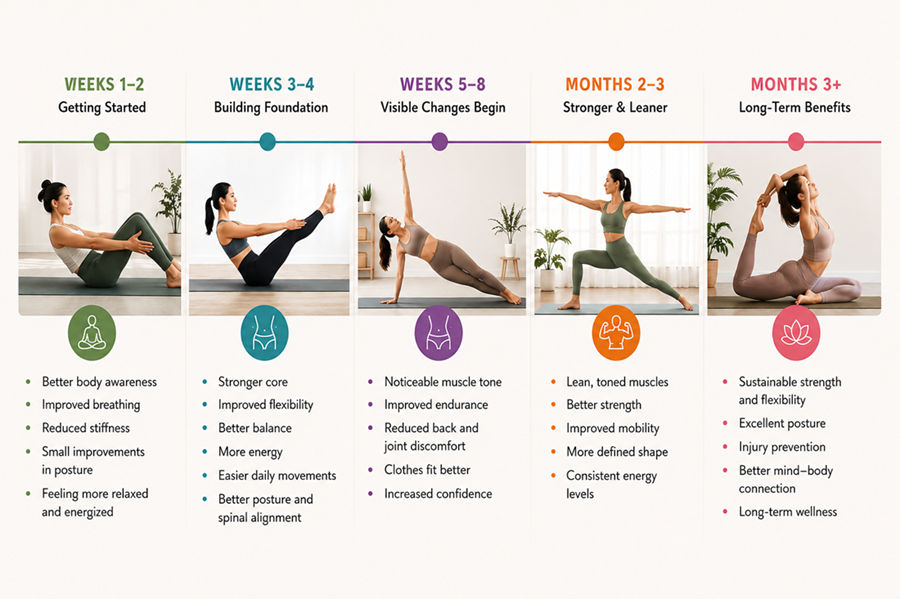
The good news is that Pilates is designed to improve your body from the inside out. While dramatic physical transformations don’t happen overnight, many people begin noticing positive changes within just a few weeks. These improvements often start with better posture, increased flexibility, stronger core muscles, and reduced body stiffness before visible changes appear in the mirror.
Unlike quick-fix fitness trends that promise unrealistic results, Pilates focuses on creating sustainable strength, improved movement, and long-term wellness. Every session helps build a healthier body by improving muscle control, balance, flexibility, and overall body awareness.
In this guide, we’ll explore a realistic week-by-week Pilates results timeline, explain the factors that influence your progress, and help you understand what changes you can expect as you continue your Pilates journey.
Why Everyone’s Pilates Journey Is Different
One of the biggest misconceptions about Pilates is that everyone experiences results at the same pace. In reality, every person’s body responds differently.
Some people notice improved posture after only a few classes, while others may take several weeks before feeling significant changes. This doesn’t mean Pilates isn’t working—it simply means your body is adapting at its own natural pace.
Remember, Pilates isn’t just about looking fit. It’s about building a stronger foundation that supports every movement you make throughout the day.
Instead of comparing yourself with others, focus on your own progress. Small improvements each week eventually lead to remarkable long-term results.
What Affects How Quickly You’ll See Pilates Results?
Several factors determine how quickly you’ll experience the benefits of Pilates. Understanding these factors can help set realistic expectations and keep you motivated.
1. Consistency Is Everything
The number one factor influencing your results is consistency.
Attending one class every few weeks won’t create noticeable changes. However, practicing Pilates 2–4 times per week allows your muscles to strengthen, improves flexibility, and builds better movement patterns.
Think of Pilates as a lifestyle rather than a temporary workout program.
2. Your Starting Fitness Level
Your current fitness level also plays an important role.
If you’re completely new to exercise, you may notice improvements relatively quickly because your body is adapting to new movements.
If you’re already active or regularly participate in strength training, your progress may be more gradual since your body is already conditioned.
Regardless of your starting point, Pilates offers benefits for beginners, athletes, seniors, and everyone in between.
3. Quality of Instruction
A certified Pilates instructor can make a significant difference in your progress.
Learning proper breathing techniques, body alignment, and controlled movement ensures you’re activating the correct muscles instead of relying on poor movement habits.
Good form is always more important than performing difficult exercises.
4. Nutrition and Hydration
Exercise alone isn’t enough.
Supporting your Pilates routine with balanced nutrition helps your muscles recover and grow stronger.
Eating enough protein, consuming nutrient-rich foods, and staying hydrated all contribute to better performance and faster recovery.
Remember, Pilates works best when combined with healthy lifestyle habits.
5. Sleep and Recovery
Many people underestimate the importance of recovery.
Your muscles repair themselves while you sleep, not during the workout itself.
Getting 7–9 hours of quality sleep each night allows your body to recover properly and prepares you for your next Pilates session.
Recovery days are just as valuable as workout days.
6. Your Personal Goals
Results also depend on what you’re trying to achieve.
Your progress timeline may differ depending on whether your goal is:
- Weight management
- Improved posture
- Better flexibility
- Core strength
- Stress relief
- Pain reduction
- Athletic performance
Each goal develops at a different pace, so measuring success isn’t always about changes on the scale.

