In modern life, stress has become almost unavoidable. Long working hours, emotional pressure, unhealthy routines, lack of movement, and constant digital exposure keep our nervous system overstimulated. Over time, this chronic stress affects not only mental health but also physical well-being—leading to fatigue, anxiety, hormonal imbalance, poor sleep, and weakened immunity.
While many people look for external solutions like supplements or medication, one of the most effective solutions is already within us. Breathwork and Pilates, when practiced together, act as a powerful natural biohack for stress relief. They work directly on the nervous system, calm the mind, release physical tension, and restore balance naturally.
This blog explains how breathwork and Pilates function individually and why their combination is one of the most sustainable ways to manage stress.
➔ Understanding Stress and Its Impact:
Stress is the body’s natural response to a perceived challenge or threat. When stress occurs, the body releases hormones like cortisol and adrenaline, preparing us for a “fight or flight” response. In short-term situations, this response is helpful. However, when stress becomes constant, the body never gets a chance to return to a relaxed state.
Effects of Chronic Stress:
- Mental exhaustion and brain fog
- Anxiety and mood fluctuations
- Muscle tightness, especially in the neck, shoulders, and lower back
- Digestive problems
- Poor sleep quality
- Weight gain, especially around the abdomen
- Hormonal imbalance
Chronic stress keeps the body in survival mode, preventing healing, recovery, and emotional stability. This is where mind-body practices like breathwork and Pilates become essential.
➔ What Is Breathwork?
Breathwork is the practice of consciously controlling breathing patterns to influence physical, mental, and emotional states. Most people breathe shallowly into the chest, especially when stressed. This type of breathing signals danger to the brain, keeping the body tense.
Why Breathwork Is Effective for Stress:
Activates the parasympathetic nervous system (rest and digest) Lowers heart rate and blood pressure
Reduces anxiety and emotional overwhelm
Improves focus and mental clarity
➔ Types of Breathwork for Stress Relief:
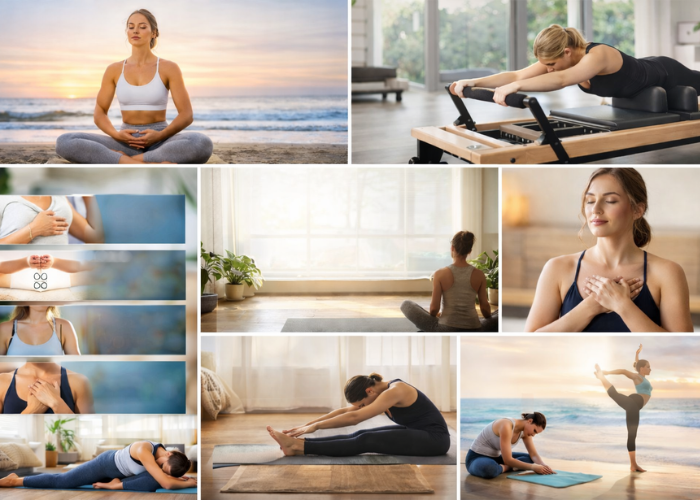
1. Diaphragmatic (Belly) Breathing
This involves slow inhalation through the nose, allowing the belly to expand, followed by a long exhale.
Benefits:
Immediate relaxation
Better oxygen exchange
Reduced muscle tension
2. Box Breathing
A structured breathing pattern: inhale, hold, exhale, hold—each for equal counts.
Benefits:
Helps manage anxiety and panic
Improves emotional regulation
Enhances concentration
3. Extended Exhale Breathing
The exhale is longer than the inhale.
Benefits:
Quickly lowers stress hormones
Signals calm to the brain
Useful during emotional overload
➔ What Is Pilates?
Pilates is a low-impact exercise system developed by Joseph Pilates. It focuses on controlled movements, posture, flexibility, core strength, and breathing. Unlike intense workouts, Pilates is gentle yet deeply effective.
Core Principles of Pilates
Breath , Control , Concentration, Precision, Flow, Centering
Breath is the foundation of every Pilates movement, making it especially effective for stress relief.
➔ How Pilates Helps Reduce Stress:
1. Nervous System Regulation
Pilates movements are slow and intentional. When combined with breath, they activate the parasympathetic nervous system, allowing the body to relax.
2. Mindfulness Through Movement
Pilates requires full attention. This focus pulls the mind away from worries and into the present moment.
3. Release of Physical Tension
Stress often accumulates in muscles. Pilates gently releases tight areas, especially in the spine, hips, and shoulders.
4. Hormonal Balance
Regular Pilates practice helps lower cortisol levels and supports overall hormonal health.
➔ The Science Behind This Combination:
Nervous System Benefits
Stimulates the vagus nerve
Improves heart rate variability (HRV)
Enhances emotional resilience
Brain Benefits
Reduces activity in the brain’s fear center
Improves mood and focus
Increases production of feel-good hormones
Physical Benefits
Better circulation
Reduced inflammation
Improved digestion and sleep quality
➔ Best Pilates Exercises for Stress Relief:
Pelvic Tilts
Release lower back tension
Improve breath awareness
Spine Stretch Forward
Calms the nervous system
Improves spinal flexibility
Cat-Cow (Pilates Style)
Releases spinal stiffness
Reduces neck and shoulder tension
Modified Hundred
Builds breath control
Improves circulation without strain
Resting Pose with Breath
Encourages deep relaxation
Emotional grounding
➔ Why This Is the Ultimate Natural Stress Biohack:
No medication
No side effects
Minimal equipment
Long-term benefits
Supports both mental and physical health
It teaches your body how to self-regulate.
➔ The Power of Breath and Mindful Movement
Stress may be part of modern life, but living in constant tension doesn’t have to be. Breathwork and Pilates offer a gentle, natural path back to balance. By slowing down, breathing consciously, and moving with intention, you allow your body and mind to reset.
This natural biohack doesn’t just manage stress—it transforms how you respond to life.

